
News
Aug 22, 2010
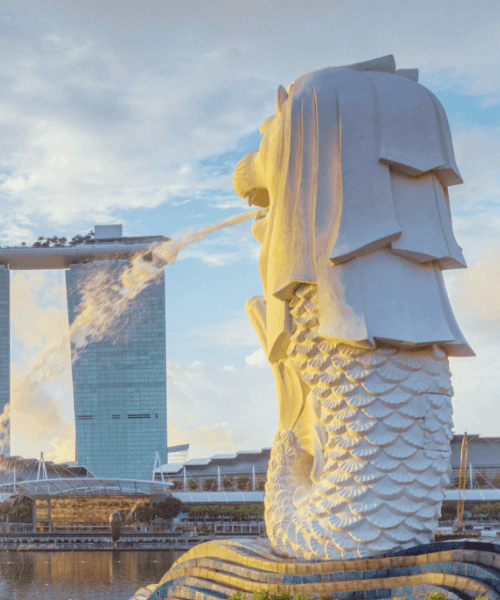
Washington - Singapore remained a top immigration hot spot for the second successive year in a global survey conducted by Gallup.
The city-state could see its population triple if everyone who wants to move here was allowed to, the poll released last Friday showed.
It found that, in that case, Singapore's population of 4.8 million would increase by 219 per cent.
The second-most popular destination was New Zealand, whose population of four million would rise by 184 per cent. Third was Saudi Arabia, whose population of 26 million would soar by 176 per cent if everyone who wants to come in and wants to leave, could do so.
Gallup researchers interviewed nearly 350,000 adults in 148 countries between 2007 and this year to calculate each country's Potential Net Migration Index (PNMI).
The PNMI is the estimated number of adults who wish to permanently leave a country subtracted from the estimated number who wish to immigrate there, as a proportion of the total adult population.
Singapore also topped a similar survey released in November last year, but with a higher index figure of 260 per cent. Second and third positions were reversed, with Saudi Arabia second and New Zealand third in last year's index.
The preferred destination of most would-be migrants is still the United States, although the already large US population of 300 million inhabitants means that the impact is less acutely felt, Gallup said.
The US is No. 14 on the net migration list, which means that if everyone who wanted to could enter the country, and all those who wished to leave did, its population would rise by about 60 per cent.
For the first time, Switzerland made it onto the list, which was first compiled last year.
Some 800,000 of the country's six million citizens said they would like to leave permanently, while some 10 million foreigners said they would move there, given the chance.
At the opposite end of the scale, the populations of Sierra Leone, Haiti and Zimbabwe would fall by more than half if migrants were allowed to leave at will.
Many countries in Africa and Latin America showed net outflows of population - although four African countries would gain residents, according to the poll.
They are Botswana, which would see its population increase by 39 per cent, South Africa, Zambia and Namibia, which would see rises of 13 per cent, 5 per cent and 2 per cent respectively.
Botswana, which ranked just after the US and just above Norway on the list, is the world's top producer of diamonds and a leading destination for high-end tourism. It prides itself as a model of successful democracy in Africa.
At rock-bottom on the Gallup list is Sierra Leone, the west African country still struggling to recover from a 10-year civil war which ended in 2002.
If everyone who wanted to leave Sierra Leone could, and everyone who wanted to move there did, its population would plunge by 56 per cent.
Haiti, the poorest country in the Americas, would lose 51 per cent of its population.
'While Gallup's findings reflect people's wishes rather than their intentions, the implications of what could happen if these desires become reality are serious considerations for leaders as they plan for the future,' said the organisation.
The lowest-ranked European Union member state on the list is Latvia, which would lose around a quarter of its population of 2.3 million if migrants were allowed to come in and go out as they wished.
13 August 2010 1440 hrs (SST)
URL : http://www.channelnewsasia.com/stories/singaporelocalnews/view/1075016/1/.html
SINGAPORE: About 20,000 professionals, managers, executives and technicians (PMETs) will be needed in the building and construction industry over the next 10 years to develop green buildings here.
Ms Grace Fu, Senior Minister of State for National Development said this at the 2010 Building and Construction Authority (BCA)-Industry Built Environment Scholarship Awards on Friday.
She said the move towards green buildings was one of the key trends being observed in the industry with countries worldwide, including Singapore, exploring ways to reduce carbon emissions and to be more energy efficient.
She said under its Green Building Masterplan, the BCA was working towards transforming the building sector to be more energy efficient, with buildings accounting for almost one third of Singapore's national electricity consumption.
She added that to support and implement the Masterplan, Singapore would need 18,000 to 20,000 PMET to be trained over the next decade.
Ms Fu said: "This green collar workforce will meet the industry's needs in developing green buildings at all stages of their life cycle - from upstream design and construction, to downstream operation and maintenance."
Another trend she noted was that Singapore's building and construction works had become more challenging over time. Given the country's constraints, it will need more complex engineering solutions to expand Singapore's underground use both in depth and in scale.
Citing the Marina Bay Sands Integrated Resort with its cantilevered skypark, and the Helix Bridge as examples, she said Singapore would need to build advanced engineering design skills, capabilities and experience.
She said, last year, the building and construction industry grew by 16.2 per cent, and averaging 18 per cent annual growth over the past three years.
The total construction demand is expected to be sustained in the coming years.
This year, 34 scholarships were awarded, up from the 19 last year. - CNA/vm
Q2 ad volumes up 39.4%; high demand in merchandising, purchasing sector
By FELDA CHAY
THE professional job market is heating up, particularly for those in the merchandising and purchasing sector, according to the latest report from HR consultancy firm Robert Walters.
Tracking advertisement volumes for professional positions such as engineers and lawyers, Robert Walters found that job advertisements rose 39.4 per cent in the second quarter of this year, as compared with the same period last year. The results, from monitoring job boards and newspapers here, suggest that employer confidence has returned - a trend that is in line with the local economy's massive rebound.
This surge in hiring in Q2 was also seen in China, Japan and Hong Kong - economies that the Robert Walters Asia Job Index covered. China saw the largest jump in the number of job ads seeking professionals with a 90.2 per cent increase in the number of ads put up within the period, as compared with last year.
Hong Kong saw a 32.3 per cent rise, and Japan 88.5 per cent.
In Singapore, the merchandising and purchasing sector appears to have had a big recruitment drive from April to June. Within those three months, the industry saw the number of ads put up for professionals in the business rise to 983 in June from 752 in April.
Customer service and account servicing staff also look to be in high demand within the quarter. The number of advertisements put up for jobs in the area went up to 1,679 in June from 1,394 in April.
Robert Walters added that industries that were the hardest hit by the recent financial melt-down, such as financial services and commerce, have resumed their pre-crisis hiring activity levels.
Said Andrea Ross, managing director of Robert Walters Singapore: 'In fact, we have seen a return to 2006/07 levels in terms of the opportunities for candidates. We have also seen improvement on the corporate advisory side, which is a clear sign of the market recovering, resulting in an uplift in jobs in sectors such as compliance, audit and risk management.
'We have also seen a rise in levels of consumer confidence and this has also affected the consumer banking business positively.'
But the financial services sector might see hiring activity slow down at the end of the third quarter.
'This is traditionally a time when candidates in the financial services sector are less likely to move as we approach the bonus season.'
This moderation is unlikely to reverse the trend of hiring growth in Singapore, Ms Ross said. 'A noticeable increment would be on the contract opportunities that exist for both IT and non-IT functions, with contract lengths ranging from 6-12 months, as companies start to favour a more flexible workforce.'
By Shamim Adam - Jul 13, 2010
“Singapore will be among the fastest-growing countries not just in Asia, but the world, this year,” said Song Seng-Wun.
Singapore’s economy expanded at a 26 percent annual pace in the second quarter after a record surge the previous three months, spurring the nation’s currency and adding to evidence of Asia’s resilience to the European crisis.
Singapore’s growth for the first quarter was revised to 45.9 percent, the fastest since records began in 1975, the trade ministry said today. Gross domestic product will rise between 13 percent and 15 percent in 2010, compared with an earlier forecast of as much as 9 percent, the ministry said.
A year after Singapore exited its worst recession since independence in 1965, tourists are arriving in record numbers, companies have increased hiring and vessels are leaving the city’s ports carrying more cargo. The island’s strengthening economy has added to an Asian rebound that prompted central banks to raise interest rates in recent weeks, even amid concern that Europe’s fiscal woes will slow the global recovery.
“Singapore will be among the fastest-growing countries not just in Asia, but the world, this year,” said Song Seng-Wun, an economist at CIMB Research Pte in Singapore. “Price pressures are already evident and we expect the central bank to be watching if inflation expectations are raised because of these numbers.”
Singapore’s growth has already prompted the central bank to allow the currency to strengthen to temper inflationary pressures. The Singapore dollar is used instead of interest rates to conduct monetary policy.
Currency Gains
The island’s currency added 0.6 percent to S$1.3745 per U.S. dollar as of 8:23 a.m. local time, bringing this quarter’s gain to 1.4 percent. Growth last quarter was more than the median estimate for a 23 percent increase in a Bloomberg News survey of 12 economists.
Policy makers in neighboring Malaysia have raised interest rates three times this year, matching the number of increases by India’s central bank. In Taiwan, Governor Perng Fai-nan moved the key rate 12.5 basis points higher last month and the Bank of Korea unexpectedly increased its benchmark last week.
“With growth likely to remain above trend for the rest of the year, the Monetary Authority of Singapore may be inclined to maintain the policy of gradual appreciation at its October policy meeting,” Wai Ho Leong, a senior regional economist at Barclays Plc in Singapore, said before the report.
Slot Machines
The two casinos run by Genting Singapore Plc and Las Vegas Sands Corp. opened in February and April this year and have since attracted millions of visitors to their slot machines and baccarat and roulette tables.
The economy grew 19.3 percent in the second quarter from a year earlier, compared with the median estimate for a 17.3 percent gain in a Bloomberg News survey.
“Growth in the trade-related sectors was bolstered by healthy global trade flows, while the openings of the integrated resorts and higher visitor arrival numbers contributed to the growth in the tourism-related sectors,” the trade ministry said in a statement. “The financial services sector also grew strongly, supported by increased foreign exchange trading and domestic bank lending activities.”
Still, Singapore’s dependence on global trade may mean it’s unlikely to escape the impact of any renewed slowdown. Governments in Europe are embarking on austerity programs to cut budget deficits and households in some of the world’s largest economies are holding back spending, clouding the outlook for the rebound.
Exports Forecast
Singapore’s non-oil domestic exports will probably gain between 17 percent and 19 percent in 2010, from a previous projection of as much as 17 percent, the trade promotion agency said today.
Overseas shipments rose 28.7 percent in June from a year earlier, after increasing a revised 24.3 percent the month before, the government said today. Electronics exports by companies including Venture Corp., Singapore’s biggest electronics contract manufacturer, climbed 43.9 percent in June, while overseas sales by pharmaceutical makers gained 29.8 percent.
Manufacturing, which accounts for about a quarter of Singapore’s economy, climbed 45.5 percent from a year earlier in the three months through June, after gaining 38.2 percent in the three months through March. Pharmaceutical output has at least doubled every month from March to May.
The performance of Singapore’s pharmaceutical industry is volatile as production swings by companies such as Sanofi- Aventis SA can cause industrial output to fluctuate.
The island’s services industry grew 11.4 percent last quarter from a year earlier. The construction industry gained 13.5 percent.
(seasonally adjusted):
The Australian unemployment rate remained steady at 5.1 per cent in June, the Australian Bureau of Statistics announced today.
The ABS reported the number of people employed increased by 45,900 people to 11.100 million, seasonally adjusted, in June.
The rise in employment was driven by a rise in part-time employment, up 27,500 people to 3.306 million. This was reinforced by a rise in full-time employment, up 18,400 people to 7.795 million. This was the tenth consecutive month Australia has seen a rise in the number of people employed full-time.
The number of people unemployed decreased in June, down 200 people to 598,400, the ABS reported.
The ABS seasonally adjusted monthly aggregate hours worked series showed a fall in June, down 6.4 million hours to 1,567.4 million hours.
The ABS reported the participation rate in June increased 0.1 percentage point to 65.2 per ce
Canada’s unemployment rate continues to fall
The Canadian economy, which only entered a mild recession last year, appears to be performing well after figures show the unemployment rate continues to fall.
Statistics Canada said on Friday that the country’s unemployment rate fell in April to 8.1%, from 8.2% in March.
The economy added a better than expected 93,000 jobs last month – exceeding the 15,000 to 20,000 analysts had forecast.
It’s the second biggest gain ever recorded by the agency in relation to the number of jobs and follows a record 108,700 jobs in April and 24,700 in May.
According to Statistics Canada, employment has grown by 403,000 over the last 12 months – making up for almost all the jobs lost during the recession.
In related news, last month the Bank of Canada became the first G7 nation to raise rates since the onset of the recession.
The decision to lift interest rates came as the Canadian economy expanded by an annualised 6.1% in the first three months of 2010.
The figure was slightly better than the 6% analysts had expected and comes after a 4.9% expansion in the final three months of 2009.
Following the jobs news, the Canadian dollar was up 1.24 U.S. cents to 97.03 cents.
Applicants must have at least one year experience in one of the following occupations in the last 10 years and meet the pass mark of at least 67 points. Points are awarded for education, ability in English and/or French, experience, age, adaptability and arranged employment in Canada.
Under the new regulations, the number of applications processed under the skilled worker category is limited to 20,000 per year and 1,000 per occupation per year. Applications received after the limit is reached will be returned. Applicants will also be required to submit the English language test result (IELTS) at the time of application.
New Occupation List
Restaurant and Food Service Managers
Primary Production Managers (Except Agriculture)
Professional Occupations in Business Services to Management
Insurance Adjusters and Claims Examiners
Biologists and Related Scientists
Architects
Specialist Physicians
General Practitioners and Family Physicians
Dentists
Pharmacists
Physiotherapists
Registered Nurses
Medical Radiation Technologists
Dental Hygienists & Dental Therapists
Licensed Practical Nurses
Psychologists
Social Workers
Chefs
Cooks
Contractors and Supervisors, Carpentry Trades
Contractors and Supervisors, Mechanic Trades
Electricians (Except Industrial & Power System)
Industrial Electricians
Plumbers
Welders & Related Machine Operators
Heavy-Duty Equipment Mechanics
Crane Operators
Drillers & Blasters - Surface Mining, Quarrying & Construction
Supervisors, Oil and Gas Drilling and Service
Q1 jobs growth rose by 36,500, below Q409 high of 37,500
By TEH SHI NING
(SINGAPORE) Singapore's economic recovery continued to drive jobs growth in Q1, pushing the unemployment rate down to pre-crisis levels.
The overall unemployment rate, adjusted for seasonal factors, was 2.2 per cent in March, down from 2.3 per cent last December, said the Ministry of Manpower (MOM) yesterday. This means that the unemployment rate has fallen to what it was back in September 2008, when the financial crisis first broke out.
Jobs growth continued for a third quarter too, albeit at a slightly slower pace, driven mostly by fresh jobs in the services sector. Total employment rose by 36,500 jobs in the first quarter, just below the seasonal high of 37,500 registered in Q4 2009, MOM's quarterly labour market report said.
This was marginally higher than preliminary estimates, but Citi economist Kit Wei Zheng noted that job creation still falls short of a 40,000 estimate from global employment firm Manpower Inc's survey. This could indicate that labour demand still exceeds labour supply, he said.
The bulk of job gains, 33,400 jobs, were from service sectors, with community, social & personal services, financial services and real estate & leasing services hiring most aggressively. Mr Kit thinks hotels and restaurants' slight loss of 100 jobs could partly reflect tighter enforcement of employment quotas for foreigners.
Meanwhile, manufacturing added 3,100 workers in Q1, its second quarter of jobs growth after trimming staff all through the downturn. But the construction sector posted its first loss of 400 jobs after 20 consecutive quarters of growth.
Mirroring several recent surveys conducted by human resource firms, MOM's report showed a pick up in job-hopping too. Higher labour turnover - signalling a tighter labour market - was seen in increases in the average monthly recruitment and resignation rates to 2.6 and 2 per cent respectively in Q1. Adecco Southeast Asia's regional manager Lynne Ng said: 'We are seeing a far more fluid job market, with candidates being more optimistic about job opportunities.'
There is reason to be too, as job vacancies rose 4.3 per cent over the three months to 37,300 in March 2010, 63 per cent above the number of job vacancies a year ago.
'People are moving for better remuneration and career prospects, and there is a distinct increase in candidate expectations with regards to salary and benefits,' said Karin Clarke, regional director of Randstad Singapore and Malaysia. And, 'organisations may also start to have flexible budgets for headhunting talent', said Kelly Services Singapore managing director Mark Sparrow. Both Randstad and Kelly are expecting the banking & finance and healthcare industries to stage more aggressive hiring in coming quarters.
Strong labour demand in coming quarters could also push headcount costs upwards. Mr Kit thinks unit labour costs - which fell 8.7 per cent in Q1 thanks to a 13 per cent hike in labour productivity - could begin rising in the second half of this year, and add to inflation pressures or squeeze the margins of more labour-intensive sectors.
Nominal wage growth also surfaced in Q1, with average monthly earnings rising 3.7 per cent year-on-year, following four consecutive quarters of decline.
Mr Kit said that there may be more pressure for nominal wages to rise going forward. Although real earnings, adjusted for inflation, rose 2.8 per cent in Q1, they remain below their March 2008 peak.
SYDNEY - AUSTRALIA'S unemployment rate dropped to 5.2 per cent in May from 5.4 per cent the previous month, data showed Thursday, beating forecasts.
The Australian Bureau of Statistics said the economy created 26,900 new jobs last month. The analysts' consensus had been for the rate to hold steady at 5.4 per cent, with a net increase of 20,000 jobs.
Treasurer Wayne Swan last month said the jobless rate had peaked last year at 5.8 per cent, well down on mid-financial crisis estimates of 8.5 per cent, as resource-rich Australia rebounds strongly.
The rate was tipped to decline to 5.0 per cent in 2010-11 and 4.75 per cent the following year, according to the annual budget estimates.
It compares with 9.7 per cent in the United States and a record 10.1 per cent in Europe, the highest since the euro came into being in 1999. — AFP
Singapore economy expected to grow 9% in 2010
Private sector economists are even more bullish about Singapore's economic outlook, raising their full year 2010 growth forecasts for Singapore.
Those polled by the Monetary Authority of Singapore (MAS) for its latest Survey of Professional Forecasters now expect the Singapore economy to grow by nine per cent this year.
This is an upgrade from their previous expectations for a 6.5 per cent growth made just three months ago in March.
The nine per cent forecast is at the upper end of the government's official forecast for 7-9 per cent growth.
The bullish assessment came after the economy expanded 15.5 per cent on-year in the first quarter.
And for next year, economists expect growth to average 5.5 per cent.
And even if growth moderates in the second half and Europe's debt crisis continues to weigh on sentiment, economists said Singapore can still rake in near double-digit growth for the full year.
"China is an important engine of growth in the region and the world, and also the US as long as they keep growing. And China, (its) growing global export demand should remain supportive of economies such as Singapore," said David Cohen, direction of Asian Economic Forecasting at Action Economics.
Looking at the various sectors, economists also upgraded the likely growth of four of the five industries.
Double-digit expansion is expected for the manufacturing, construction and wholesale and retail trade sectors, though financial services is expected to grow as well.
The private economists said the manufacturing sector is now expected to expand by close to 17 per cent.
Construction will grow by 10 per cent and the financial services sector is expected to grow by nine per cent.
Singapore's non-oil domestic exports are expected to grow almost 18 per cent.
Manufacturing is predicted to drive growth, as economists forecast a 16.7 per cent on-year increase, up from the previous forecast of 9.7 per cent.
The only exception is the hotels and restaurants sector, where respondents cut their forecast from 8.5 per cent to 8.2 per cent.
Some economists are taking a cautious stance.
"As you have seen how things are evolving in the present situation, it looks like there are more risk factors coming on board or becoming more visible. So we would like to be more cautious on the outlook and are keeping to our old forecast of 6.5 per cent GDP growth," said economist Alvin Liew, Global Research, Standard Chartered Bank.
For the second quarter this year, economists said growth may probably come in at 9.4 per cent on-year, higher than 6.3 per cent in the previous survey.
With higher growth, analysts also expect consumer prices to creep up.
Their median inflation forecast for the full year climbed marginally from 2.7 per cent to 2.8 per cent, with second quarter inflation expected at 3.2 per cent.
As for the labour market, the respondents expect the unemployment rate to be at 2 per cent by the end of the year, unchanged from the previous survey.
NEW YORK : Vienna has the world's best quality of life and Baghdad the worst, with wildly popular but less organised cities like New York and London falling between, according to a survey Wednesday.
Mercer consultants' city rankings for 2010 lists Vienna, Zurich, Geneva, Vancouver and Auckland the top five urban living destinations.
Paris comes in only at 34, London at 39, Tokyo 40, Madrid 48 and New York at a lowly 49.
The list, aimed at government or multinational human resources departments, does not pretend to rank the most exciting or energetic cities, instead concentrating on stability, safety and public services.
"Mercer evaluates local living conditions in all the 420 cities it surveys worldwide. Living conditions are analyzed according to 39 factors, grouped in 10 categories," the company says.
These include crime levels, banking services, personal freedoms, sanitation, schools, transport, and climate.
On these criteria, cities known chiefly for cleanliness and calm come out well.
Switzerland scores three times in the top 10 with the addition of Bern at number nine. Germany also has three top 10: Dusseldorf, Frankfurt and Munich.
In 10th place is Sydney, closely followed by New Zealand's Wellington at 12.
Auckland, sharing fourth place, leads Asian-Pacific cities, followed by Sydney, Wellington, Melbourne at 18 and Perth at 21. Singapore keeps its place as highest-ranking Asian city at 28, followed by Tokyo, Kobe and Yokohama in Japan.
Bottom of the Asian heap are Dhaka in Bangladesh at 206 and the ex-Soviet cities of Bishkek, Kyrgyzstan, and Dushanbe in Tajikistan at 209 and 210.
Nothing though can match Baghdad at 221.
"A lack of security and stability continue to have a negative impact on Baghdad's quality of living and its score remains far behind that of Bangui (27.4) in the Central African Republic which is second to last," Mercer says.